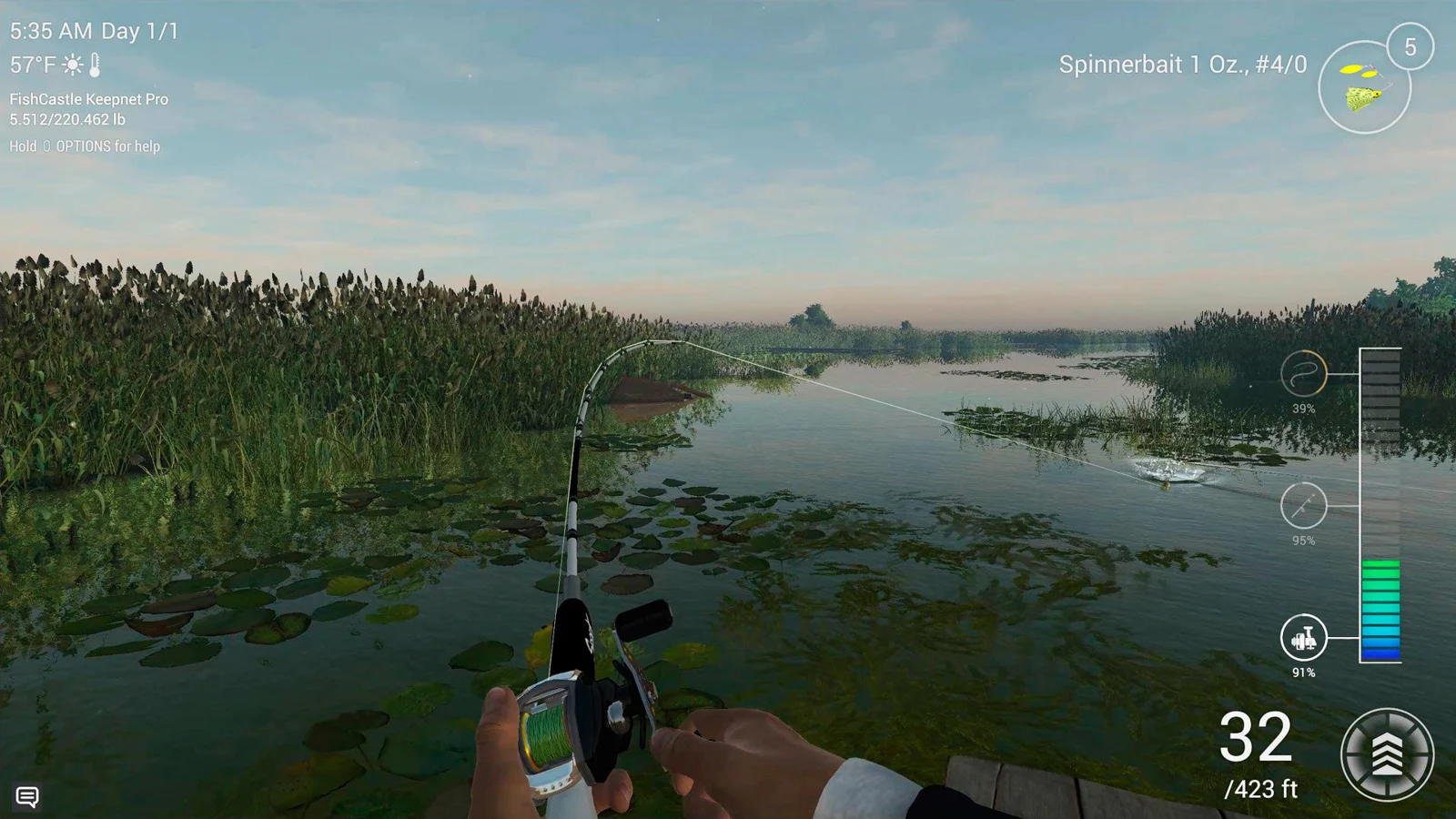
When the system is overloaded
A high tension warning is feedback about the present load, not a badge for fighting hard. Continuing the same input can leave the equipment under sustained stress. Understand which controls reduce the resistance or change the action you are taking. The aim is to bring the encounter into a manageable state, not to keep a warning visible because the fish is nearly at the bank.
When you have controlled contact
Between overload and slack lies the part of the encounter where you can recover line while maintaining useful contact. Watch whether line-out distance is shrinking and whether the tension reading remains understandable. Avoid treating this as permission to increase everything immediately. A fish can change direction, so the useful state is temporary rather than a setting you choose once at the beginning.
When the fish closes the gap
A fish moving towards the angler can create a different problem: insufficient tension. More patience is not automatically the answer if contact is being lost. Recovering line and using the rod controls becomes the relevant task. The exact platform inputs should come from your bindings, but the decision is concrete: distinguish line leaving under pressure from line becoming slack as distance closes.
Use a three-column replay
After a lost encounter, reconstruct three brief moments: what the distance display did, what tension showed, and what input you chose. For example, an illustrative replay might read distance falling, tension dropping, angler stopped recovering line. That is a specific situation to understand. It is much more useful than labelling the whole encounter as a fish that was simply too big.
A diagnostic card
Distance rising plus high tension suggests a run under load. Distance falling plus low tension suggests closing distance and possible slack. Neither combination identifies an exact cause by itself, but the paired readings stop you from treating opposite situations as the same problem. The review becomes clearer when it names the state before the response. Write overload, contact or slack as a provisional label, then keep the actual readings beside it so the label can be checked.